
How Abdullah Al-Othman Opened Saudi Payments Beyond the Banks
Abdullah Faisal Al-Othman, founder and Executive Chairman of Geidea, built the Saudi fintech that became the first non-bank licensed by SAMA to acquire merchant payments directly.
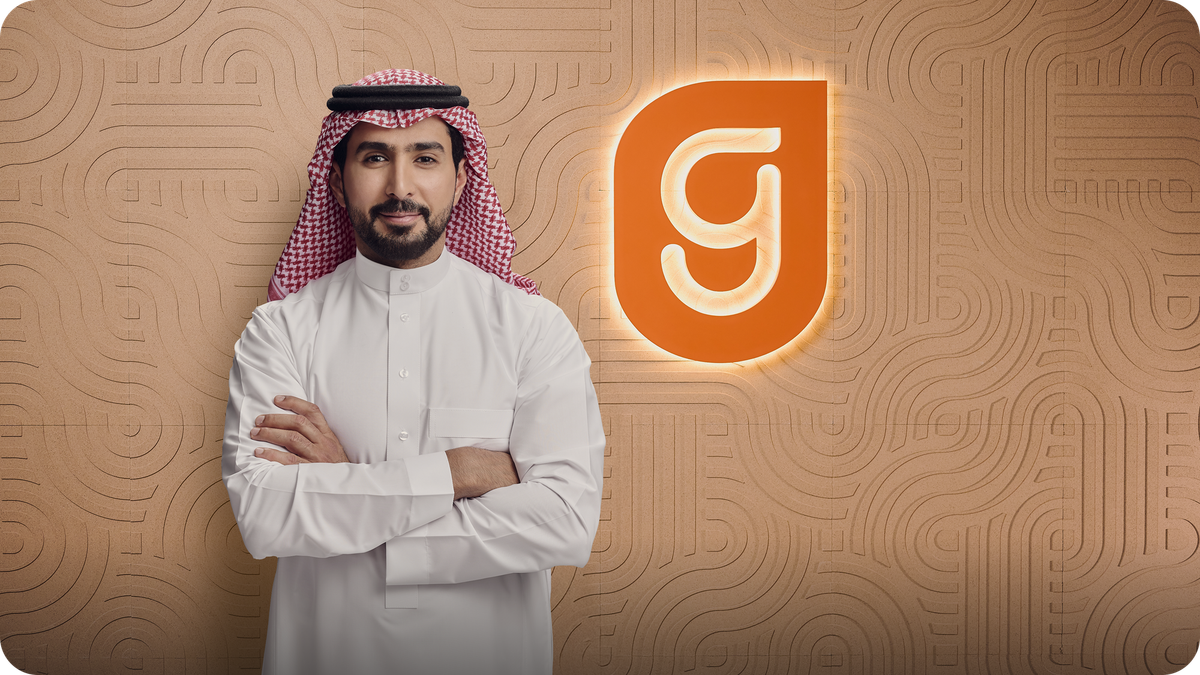
In March 2021, a Saudi company that started by selling payment terminals to banks became the first non-bank in the Kingdom licensed to process card payments for merchants directly. That company was Geidea. The man who founded it had been preparing for that moment for more than a decade.
Abdullah Faisal Al-Othman is the Founder and Executive Chairman of Geidea, the Riyadh-based payments technology company. He also founded AO Holding, a family investment house, and co-founded United Lemar, a real estate development company.
His career rests on one idea. Payments are not a product. They are infrastructure, and whoever builds that infrastructure for small merchants shapes how the whole economy moves.
Profile at a Glance
- Full name: Abdullah bin Faisal Al-Othman (عبدالله بن فيصل العثمان)
- Current role: Founder and Executive Chairman, Geidea; Founder, AO Holding
- Sector: Financial technology, digital payments, real estate
- Education: Bachelor's in Information Technology, King Saud University; MBA, Alfaisal University (per published biographies); London Business School also listed on his LinkedIn profile
- Known for: Building Geidea into one of Saudi Arabia's largest payment service providers
- Notable milestones:
- 2018: Gulf Capital acquires a stake in Geidea in a deal valued above SAR 1 billion
- 2020: Geidea receives SAMA's first license for a payment services company
- 2021: Geidea becomes the first non-bank in the Kingdom granted a merchant acquiring license
The Signature Contribution: Opening Payments to Non-Banks
For most of Saudi Arabia's history, accepting a card meant going through a bank. Merchants rented terminals through banks. Settlement ran through banks. Small businesses often waited in line.
Al-Othman's company changed that structure. In early 2020, the Saudi Central Bank (SAMA) issued its first license for a payment services company to Geidea, after a trial period in the regulator's sandbox. STC Pay received the first e-wallet license at the same time.
A year later came the bigger step. In March 2021, Geidea was granted a merchant acquiring license, making it the only non-bank institution in the Kingdom to hold one at the time. The license allowed Geidea to process payments end to end, directly with merchants. The pattern is clear. He did not fight the banks. He built alongside them until the rules allowed him to stand on his own.
Early Life and Education
Public information about Al-Othman's early life is limited. What is documented is his education.
Published biographies state he earned a bachelor's degree in Information Technology from King Saud University and an MBA from Alfaisal University. His LinkedIn profile also lists London Business School.
The technology degree matters to his story. He entered business with a technical foundation, which helps explain why his biggest bet was on digital infrastructure rather than a traditional trade.
Foundation: Real Estate First
Several professional biographies place the start of his career in real estate in 2008. They describe early success in that sector as the capital and confidence behind his move into fintech.
He co-founded United Lemar, a real estate development company focused on the commercial sector. One published profile credits Lemar with projects in Riyadh including the Arcade Centre on King Fahad Road and the Malga neighborhood.
Real estate taught a lesson he later applied to payments. Value comes from owning the ground other businesses operate on.
The Defining Chapter: Building the Terminal Network
Geidea's official history dates its founding to 2008. Some biographies place the start of the fintech venture in 2011. Either way, the early model was clear.
Geidea began by supplying software, payment terminals, and ATMs to banks. It was a business-to-business play. Banks owned the merchant relationships. Geidea supplied the machines and the technology behind them.
Published profiles say that by 2016 Geidea had become one of the largest suppliers in its sector, with hundreds of thousands of terminals deployed. The company later described itself as the largest fintech in Saudi Arabia by market share. This chapter built his name. It also built the reach that made the later licenses meaningful.
Capital, Licenses, and New Markets
In May 2018, Gulf Capital acquired a strategic stake in Geidea. The transaction was valued at more than SAR 1 billion, roughly $266 million. Gulf News described it as the largest acquisition in the Saudi fintech sector up to that point.
The capital came before the licenses. The licenses came before the regional push. Geidea expanded into Egypt, where it received a payments facilitator license from the Central Bank of Egypt, and into the UAE through a partnership with Magnati.
By September 2025, Geidea reported serving more than 650,000 merchants. It also announced country leadership in the UAE. Each step followed the same sequence: secure the foundation, then scale.
Executive Chairman
Al-Othman no longer runs daily operations as chief executive. Published career records show he served as CEO of Geidea until 2018 before moving to the chairman's role.
His current work sits at the board level. In 2024, Geidea announced new appointments, including Ziyad AlEisa, a former CEO of Neoleap, and Abdulmalik AlSheikh as an independent board member. Country CEOs now lead Geidea's markets.
In September 2026, he announced that Geidea had secured accreditation to process e-commerce payments through the National Payment Gateway, alongside certification for its SoftPOS service. The chairman's job, as he practices it, is to secure the next license, the next partner, and the next layer of the stack.
Payments as Infrastructure for Small Merchants
Geidea's product story centers on small businesses. In 2021 the company launched what it described as the region's first app-based "Tap on Phone" solution. Merchants could accept contactless payments on their own smartphones, without a separate terminal.
That matters for who gets to participate. A taxi driver, a home-based business, or a small café can accept cards without renting hardware. In his writing, Al-Othman has argued that fintechs can reach parts of the economy banks cannot, including home-based businesses often run by women.
His recognition reflects this reach. He was named among Arabian Business's most influential figures in Saudi Arabia and writes as a columnist for Arab News. His investments span Saudi Arabia, the UAE, Bahrain, the UK, Austria, and India. The impact is measured less in headlines than in the number of merchants who now accept digital payments.
The Financial Sector Development Program
Al-Othman's work maps directly onto the Financial Sector Development Program, one of the Vision 2030 realization programs. A core goal of that program is a shift from cash to digital payments.
SAMA framed its 2020 non-bank licenses as part of this program. The aim was to open financial services to payment providers and fintechs and support private sector growth. Geidea was one of the first two companies through that door.
The link is specific. Vision 2030 set the target. SAMA built the licensing path. Geidea was among the first to walk it.
Closing: What His Path Teaches
Al-Othman's path is not a story of a sudden breakthrough. It is a story of sequencing. Real estate funded the start. Selling to banks built the network. Capital funded the licenses. The licenses opened direct access to merchants.
In a 2026 interview, he described the goal as "designing speed that deserves trust." That line sums up his career. He moved fast, but always within the regulator's framework.
For the next generation of Saudi founders, especially those building under Vision 2030, the lesson is practical. Build the infrastructure others depend on. Earn the trust of those who set the rules. Then scale.
Lessons from Abdullah Faisal Al-Othman
- Start where the customers already are. Geidea sold to banks first, which built a national terminal network before it could serve merchants directly.
- Treat regulation as a door, not a wall. Geidea entered SAMA's sandbox and became one of the first non-banks licensed to handle payments.
- Sequence capital before scale. The 2018 Gulf Capital deal came before the licenses and the regional expansion.
- Build for the smallest customer. Tap on Phone let a merchant accept cards with nothing more than a smartphone.
Frequently Asked Questions
Who is Abdullah Faisal Al-Othman? Abdullah Faisal Al-Othman is a Saudi entrepreneur and the founder of Geidea, a Riyadh-based payments technology company. He also founded AO Holding and co-founded United Lemar.
What is Abdullah Faisal Al-Othman's role at Geidea? He is Geidea's Founder and Executive Chairman. He previously served as the company's chief executive.
What is Abdullah Faisal Al-Othman known for? He is known for building Geidea into one of Saudi Arabia's largest payment providers. In 2021 it became the first non-bank in the Kingdom licensed by SAMA to acquire merchant payments directly.
When was Geidea founded? Geidea's official history states it was founded in 2008. Some published biographies date the start of the fintech venture to 2011.
Sources
- Geidea, "About Us" (official company history): geidea.net
- Abdullah Faisal Al-Othman, LinkedIn profile and X account (@Alothmanabz)
- Gulf Capital press release, May 2018; Gulf News and Forbes Middle East coverage of the Gulf Capital stake
- Menabytes and SME10x, SAMA's first non-bank licenses, 2020
- The Fintech Times, Zawya and Gulf Capital, Geidea acquiring license and Tap on Phone, March 2021
- CFI.co, profiles of Abdullah Al-Othman and Geidea, 2021 and 2022
- Arab News, author profile and interview with Abdullah Othman, 2022
- Forbes Middle East, "Facilitating a New Digital Economy," 2022
- Arabian Business Arabic, "50 Most Influential in Saudi Arabia," 2021
- Zawya, Geidea leadership appointments, February 2024 and September 2025
- Entrepreneur Middle East, "The Finance Frontier 2026," July 2026
- TechAfrica News, Geidea National Payment Gateway accreditation, September 2026
Discover more inspiring stories at Saudi Wins, where Vision 2030 comes to life.