
Dr. Sulaiman Al Habib: Building a Saudi Healthcare Legacy
Discover how Dr. Sulaiman Al Habib grew from a Saudi pediatrician into a healthcare pioneer, building HMG and advancing healthcare innovation in Saudi Arabia.
Saudi Arabia’s healthcare landscape is undergoing a historic transformation. Across the Kingdom, new hospitals, digital health platforms, advanced medical technologies, and growing private-sector participation are reshaping how care is delivered. Yet some of the foundations supporting this transformation were being built decades before Vision 2030 began.
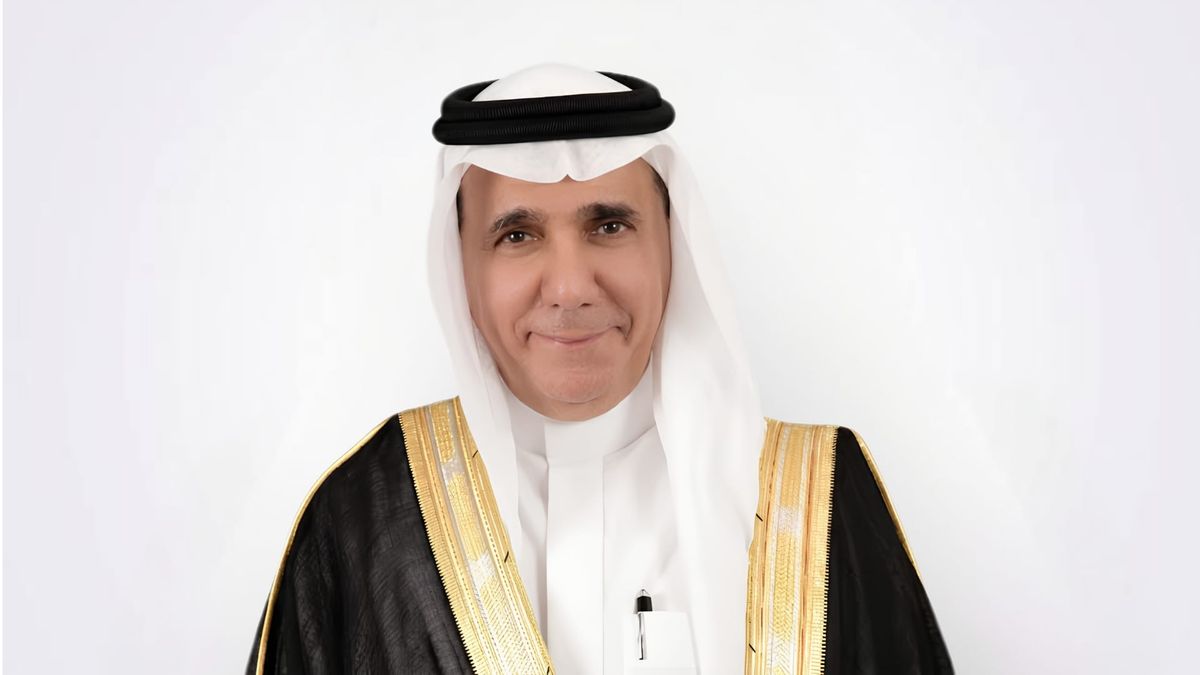
One of the people behind that story is Dr. Sulaiman Abdulaziz Al Habib, the Saudi physician and entrepreneur who founded Dr. Sulaiman Al Habib Medical Services Group (HMG). HMG’s roots stretch back to a medical enterprise legally established in 1993, while the group traces its operational healthcare journey to the opening of the Olaya Medical Complex in Riyadh in 1995, initially comprising 38 clinics and one pharmacy.
Three decades later, that beginning has developed into a publicly listed healthcare group spanning hospitals, specialized medical centers, pharmacies, laboratories, healthcare technology, home healthcare, and medical education. It is a transformation that tells a larger story about what can happen when clinical knowledge meets entrepreneurship, technology, and decades of disciplined execution.
From Pediatrician to Healthcare Leader
Long before becoming known as a healthcare entrepreneur, Dr. Al Habib built his career in medicine. He graduated from King Saud University in Riyadh with a degree in Medicine and Surgery in 1977, before pursuing specialist training in pediatrics. In 1984, he earned a Fellowship in Pediatrics from the Royal College of Physicians.
His career subsequently included senior responsibilities within Saudi healthcare. He served in pediatric leadership, including as Head of Pediatrics at Security Forces Hospital in Riyadh. That medical background is central to understanding the institution he would later build. Dr. Al Habib did not enter healthcare as an outside investor looking for a promising industry. He came from inside the profession. As a physician who understood the clinical environment, the needs of patients, and the demands of running healthcare services. That combination of medical expertise and entrepreneurial thinking would eventually become one of the defining characteristics of his career.
The First Step: Building HMG in Riyadh
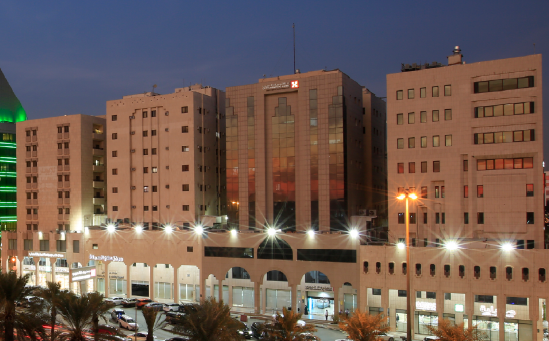
The beginnings of HMG were comparatively modest. The enterprise that ultimately became Dr. Sulaiman Al Habib Medical Services Group was legally established as a sole proprietorship in 1993, with initial capital of SAR 100,000. HMG traces the beginning of its healthcare operations to 1995, when the Olaya Medical Complex began serving patients in Riyadh. At the time, it consisted of 38 clinics and one pharmacy.
What followed was not simply the growth of a successful clinic. It was the gradual construction of a healthcare model that could be expanded across specialties, facilities, and cities. As demand grew, HMG moved beyond outpatient care into hospitals and increasingly specialized medicine. The group expanded into areas including maternity care, orthopedics, spinal care, cardiovascular medicine, and other advanced specialties. The original Riyadh complex had become the foundation for something far larger.
From One Medical Complex to a Regional Healthcare Group
Over the following decades, HMG accelerated its expansion. New facilities appeared across Riyadh and other parts of Saudi Arabia, alongside a regional presence that included healthcare operations in Dubai and Bahrain. The group developed hospitals in Al Rayan, Al Takhassusi, Al Sweidi, Al Khobar, and other locations, while continuing to invest in new-generation healthcare facilities across the Kingdom. But HMG’s expansion was not purely geographic.
The organization broadened into pharmacies, laboratories, home healthcare, healthcare technology, medical education, and other services, creating an increasingly integrated healthcare ecosystem around its hospital network. By 2024, HMG reported more than 25 medical facilities, 3,300 beds, 4,500 physicians, 35 pharmacies, and over 24,000 employees. During that year, its facilities served approximately 7.4 million patients.
The financial scale is equally significant. For 2025, HMG reported approximately SAR 13.7 billion in revenue, demonstrating just how far the organization had developed from its original outpatient beginnings. The numbers are impressive, but the deeper achievement lies in repeatability: building an organization capable not simply of opening a hospital, but of creating and operating healthcare infrastructure at scale.
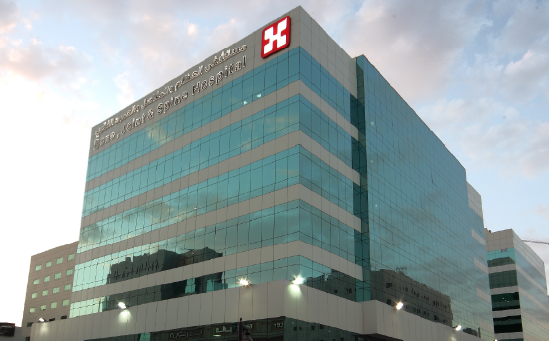
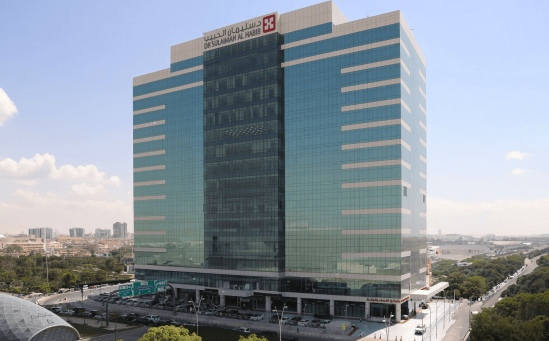
Dr. Sulaiman Al Habib Medical Group branches, featuring the specialized Bone, Joint & Spine Hospital and Women’s Health Hospital.
Taking a Saudi Healthcare Company Public
Another defining chapter arrived in March 2020, when Dr. Sulaiman Al Habib Medical Services Group listed on the Saudi Exchange. The listing marked an important transition. What began as a founder-led medical enterprise had developed into a publicly traded Saudi healthcare company operating under the governance, transparency, and disclosure requirements of the capital markets.
Dr. Al Habib nevertheless remained closely connected to the institution he created. He continues to serve as Chairman of HMG and remains a major shareholder in the company. His personal financial success has consequently attracted international attention, with global business publications ranking him among the Middle East’s wealthiest healthcare entrepreneurs. But wealth alone does not explain the significance of his journey.
The more consequential story is the institution behind that wealth: an organization built over decades that employs thousands of people, treats millions of patients, develops healthcare professionals, and continues investing in Saudi medical infrastructure.
Building A Digital Hospital
Perhaps one of the most forward-looking dimensions of HMG’s evolution is its investment in digital healthcare. Modern medicine increasingly extends beyond the walls of a hospital. Patient applications, electronic health records, remote consultations, artificial intelligence, connected medical systems, and data-driven diagnostics are becoming fundamental parts of healthcare delivery.
HMG has invested heavily in that transition. The group has developed its own healthcare technology capabilities, including internally designed digital applications and systems. Among them is VIDA, HMG’s hospital information system, which had been implemented at more than 65 Ministry of Health facilities by the end of 2024.
HMG also reported more than 683 million interactions with its digital application during 2024, illustrating the scale at which patients increasingly interact with healthcare services digitally. Its wider technology strategy includes telemedicine, electronic health records, advanced diagnostics, robotics, and applications of artificial intelligence.
This matters because the hospital of the future is not defined only by the number of beds it contains. Increasingly, it is defined by how intelligently information moves between patients, physicians, laboratories, pharmacies, diagnostic equipment, and healthcare systems. The institution Dr. Al Habib founded has therefore evolved beyond constructing physical hospitals. It is increasingly participating in building the digital infrastructure of modern healthcare.
Developing the People Behind Saudi Healthcare
Hospitals and technology alone cannot transform healthcare. People do. That makes HMG’s growing investment in education and professional development another important part of Dr. Al Habib’s institutional legacy. Through HMG Academy, the group supports undergraduate training, internships, residency programs, fellowships, diplomas, and professional development.
In 2024, HMG reported 772 postgraduate and diploma trainees, while more than 2,500 undergraduate trainees completed internships or clinical rotations within its hospitals. The group has also developed relationships with Saudi universities and educational institutions to strengthen the pipeline of future healthcare professionals.
Its ambitions extend to nursing education as well. HMG has outlined plans aimed at contributing thousands of trained nurses by 2030, an important area as Saudi Arabia expands healthcare capacity and develops its national workforce. This creates a multiplier effect. A hospital can treat thousands of patients. But an institution that also trains physicians, nurses, specialists, and healthcare professionals can influence the quality of care far beyond a single facility.
For Saudi Arabia, that human-capital dimension is particularly important. The Kingdom’s healthcare transformation requires not only world-class infrastructure, but also Saudi professionals equipped to lead and operate increasingly sophisticated healthcare systems.
A Healthcare Vision Aligned with Vision 2030
Dr. Al Habib began building his healthcare enterprise more than two decades before the launch of Saudi Vision 2030. His story should not be rewritten as though Vision 2030 inspired HMG’s creation. Instead, what makes the connection compelling is how capabilities developed over decades now align with many of the Kingdom’s national healthcare priorities.
Vision 2030 and the Health Sector Transformation Program emphasize areas including healthcare accessibility, private-sector participation, digital transformation, quality of care, workforce development, and more efficient healthcare delivery. HMG’s continued investment in hospitals, specialized medicine, digital health, education, and Saudi talent intersects with many of these priorities.
In that sense, the group represents something increasingly important to Saudi Arabia’s transformation: private-sector capacity capable of complementing national healthcare ambitions at scale. Its story also demonstrates that national transformation does not begin from zero. It builds upon decades of Saudi expertise, entrepreneurship, investment, and institution-building, and then accelerates them toward new goals.
More Than Hospitals: The Legacy of an Institution Builder
Dr. Sulaiman Al Habib’s professional journey can be traced through several distinct identities: physician, pediatric specialist, medical leader, entrepreneur, founder, and chairman. But perhaps the description that connects them all is institution builder. His career demonstrates how specialized knowledge can become the foundation for entrepreneurship, and how entrepreneurship, sustained over decades, can develop into infrastructure with national significance.
From the Olaya Medical Complex to a publicly listed healthcare group, HMG’s evolution has required more than ambition. It has required the ability to repeatedly execute: recruiting medical talent, developing facilities, adopting technology, expanding into new specialties, training healthcare professionals, and maintaining an organization capable of continuing to grow. That longevity may ultimately be one of the strongest measures of Dr. Al Habib’s impact.
1. Building Healthcare at Scale
Turned an early Riyadh medical complex into an integrated healthcare group spanning hospitals, specialized centers, pharmacies, laboratories, and home healthcare services.
2. Advancing the Digital Hospital
HMG has invested in smart hospitals, digital health platforms, telemedicine, AI-enabled solutions, and connected systems designed to make healthcare more efficient and accessible.
3. Developing the Next Generation of Medical Talent
Through HMG Academy and its training programs, the group supports the development of physicians, nurses, specialists, and students, strengthening Saudi Arabia’s healthcare workforce.
4. Supporting the Healthcare Ambitions of Vision 2030
By expanding private healthcare capacity, investing in technology, and developing Saudi talent, the institution he founded contributes to priorities at the heart of the Kingdom’s healthcare transformation.
A Saudi Healthcare Story Still Being Written
In 1995, HMG’s operational journey began with 38 clinics and a single pharmacy in Riyadh. Three decades later, the organization carries the name of its founder across a healthcare network serving millions of patients and employing thousands of professionals. That distance, from physician to founder, and from medical complex to healthcare ecosystem, is what makes Dr. Sulaiman Al Habib’s story significant.
It is not simply a story about building hospitals or creating a successful company. It is about turning expertise into enterprise, enterprise into an institution, and an institution into lasting healthcare capacity. As Vision 2030 creates new possibilities for Saudi physicians, scientists, entrepreneurs, and innovators, Dr. Al Habib’s journey offers a powerful example of what long-term institution-building can achieve. Some of the Kingdom’s most consequential enterprises can begin with a professional who understands a challenge deeply, and then spends decades building the organization capable of addressing it at scale.
Discover more inspiring stories at Saudi Wins, where Vision 2030 comes to life.